Loading...
Serving Port Arthur, TX and surrounding areas. (409) 217-6028
A railing that wobbles, rotates, or has been weakened by flooding is a real safety risk. We install and replace deck railings in Port Arthur with materials and post anchoring built for Gulf Coast conditions - not just what looks good on day one.
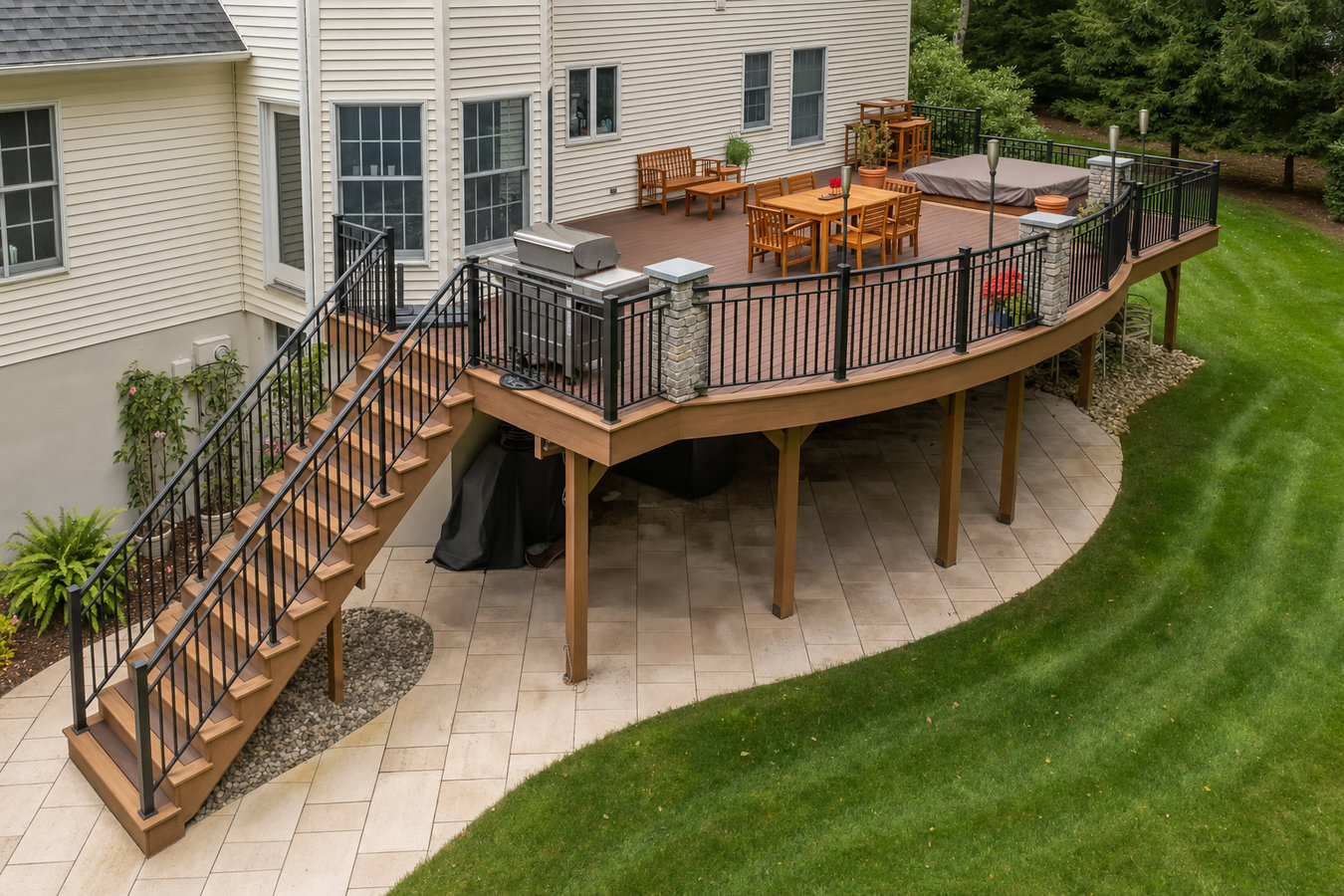
Deck railing installation in Port Arthur means setting properly anchored posts, attaching top and bottom rails, and filling in balusters to code - most residential installs are complete in a single day once materials are on site and any required City of Port Arthur permit is in hand.
In Port Arthur, railing is not just a design element - it is a safety requirement for any deck more than 30 inches off the ground, and a large share of homes here sit on pier-and-beam foundations that put decks well above that threshold. The difference between a railing that holds and one that fails comes down almost entirely to how the posts are anchored to the deck frame. Posts bolted through the rim joist are far more secure than posts surface-mounted on top of the decking, and that distinction matters especially on elevated decks exposed to Gulf Coast wind and storm conditions. If you are also building a new deck or replacing a platform, our custom deck design and build service can incorporate railing from the start so the framing is designed to support it correctly.
We inspect the existing deck frame before installing any porch railing - a new railing bolted to rotting or flood-damaged framing is a safety hazard, and we will tell you honestly if something underneath needs to be addressed first. We also pull the required building permit and coordinate the city inspection on your behalf.
Stand at a corner post and push firmly on the top rail. If it moves more than a half-inch or you feel the post shifting at the base, the railing is no longer structurally sound. A railing that wobbles is a fall risk - especially for children and older adults - and should be replaced before anyone leans against it with any force.
In Port Arthur's humid climate, wood posts are the first place rot tends to appear. Press a screwdriver into the base of each post where it meets the deck surface - if the wood gives way or feels spongy, rot has set in. Peeling paint or dark water stains running down a post are early warning signs that moisture has been getting in and the structural connection is being compromised.
Some older Port Arthur homes on pier-and-beam foundations have elevated decks that were built before current safety requirements were in place. If your deck sits more than 30 inches above the yard and has no railing, you have a real fall hazard and a potential liability issue if a guest is injured. Adding compliant railing resolves both the safety problem and the code issue.
Jefferson County has experienced significant flood events in recent years, and deck railings often take damage that is not visible from the surface. If your railing was submerged during Harvey or a subsequent event, the anchoring hardware may be corroded even if the posts look fine. The connections you cannot see are the ones most likely to have been weakened by salt water exposure.
We install new railing and replace existing railing throughout Port Arthur and surrounding Jefferson County. Every project starts with a deck frame inspection - we check the rim joist, ledger board, and existing post anchoring before ordering materials, because the frame has to be sound before any new railing goes in. Material options include pressure-treated wood, aluminum, and composite systems, and we help you choose based on your budget, maintenance preferences, and how the deck was built. The North American Deck and Railing Association (NADRA) provides deck safety guidelines that inform our post anchoring methods, baluster spacing, and railing height selection on every project we take on in Southeast Texas.
For homeowners building a new deck at the same time as railing, combining both with our multi-level decks service means the framing is engineered to support the railing from the start - which simplifies installation and typically reduces total cost compared to adding railing to an existing structure. And if you also want to combine railing with a covered structure, our custom deck design and build service coordinates all of those elements as a single project.
Best for homeowners who want the lowest upfront cost and are willing to seal and repaint every few years to maintain it in Port Arthur's humid conditions.
Right for homeowners who want the lowest long-term maintenance - aluminum does not rot, warp, or corrode in coastal air and requires virtually no upkeep.
Suited for homeowners who want the appearance of painted wood without the ongoing maintenance - composite holds up well in salt air and humidity without frequent recoating.
For decks significantly above grade - common on Port Arthur pier-and-beam homes - with post anchoring and height requirements sized for the actual elevation of each platform.
Port Arthur sits just a few miles from the Gulf of Mexico, and the air here carries moisture and salt year-round. Wood railing that might last 15 years in a drier climate can begin to rot, warp, or peel in five to seven years here without consistent sealing and painting. That maintenance demand is not a warning about poor materials - it is simply what Gulf Coast conditions do to organic materials over time. This is the single biggest reason we often recommend aluminum or composite railing over untreated wood: the upfront cost difference is real, but so is the long-term savings on maintenance and replacement. Homeowners in Groves and Port Neches face the same coastal exposure, and we spec materials the same way across the entire Southeast Texas area.
Port Arthur also has a large proportion of homes built on pier-and-beam foundations, many raised further after Hurricane Harvey in 2017. Those elevated decks often sit 3 to 5 feet above grade or higher, which means railing height requirements are stricter, post anchoring has to be more robust, and the visual prominence of the railing from the yard is much greater than on a slab-on-grade home. The Texas Department of Insurance notes that fall protection from compliant deck railing is one of the most common home safety upgrades that reduces liability risk for homeowners - a detail that matters even more on the elevated decks common in Port Arthur.
We will ask about your deck's size, how high it sits off the ground, what material you are considering, and whether you have had any flooding or storm damage. This short conversation - usually 10 to 15 minutes - helps us decide what to look for when we visit. We reply to all inquiries within one business day.
We visit your home to measure the total railing run, check the condition of your deck frame and existing posts, and review how the deck attaches to your house. A contractor who quotes railing over the phone without seeing the deck is skipping a step that almost always leads to problems later - either for you or for them.
If your project requires a permit - which is common when posts are being replaced or newly installed - we handle the application with the City of Port Arthur's building department. Permit fees are typically modest and the process usually adds one to two weeks before work can begin. We confirm this is covered in your contract before we start.
Most residential railing installs are complete in one day. We set posts first, then attach rails, then fill in balusters. If a permit was pulled, a city inspector will schedule a visit to confirm the railing meets local requirements - we coordinate this. Once inspection passes, we do a final walkthrough with you before we consider the job done.
We visit your deck in person before quoting. You will have a written estimate with a full line-item breakdown before any work begins - no surprises on the final invoice.
(409) 217-6028A new railing anchored to a rotting or flood-damaged frame is a safety hazard. Before any materials are ordered or work begins, we check the rim joist, existing post connections, and ledger board. If something underneath needs repair, we tell you upfront - not after the railing is already bolted in place. That kind of honesty saves you from a more expensive problem down the road.
We are familiar with what Port Arthur's humidity, salt air, and storm exposure do to railing materials over time. We guide every homeowner through the real trade-offs between wood, aluminum, and composite - based on what holds up in this specific climate, not just what we happen to have in stock. A railing that still looks solid five years from now is a better outcome than one that was slightly cheaper on day one.
We pull the City of Port Arthur building permit when required and coordinate the final inspection so you do not have to manage either. A railing that is fully permitted and inspected protects you at resale and confirms the work meets current safety standards. That documentation has real value and we make sure every project we finish has it.
Port Arthur homeowners use their outdoor spaces year-round, and a deck that is blocked off for days at a time is a real inconvenience. For most residential railing projects, our crew completes the full installation - removal of old railing, new post anchoring, rails, and balusters - in one day and cleans up before leaving. You get your deck back quickly, without living around a construction zone.
Porch railing installation in Port Arthur is not a simple swap-one-for-another job when elevated foundations, flood history, and coastal material demands are involved. Getting the post anchoring, height, and material selection right the first time is what we bring to every project - and every railing we install is backed by the permit and inspection record that shows the work was done correctly.
Plan and build a complete new deck with railing incorporated from the start, designed for your specific lot conditions and outdoor living goals.
Learn MoreMulti-platform deck structures for sloped lots and elevated foundations, where railing requirements vary by level height and structural design.
Learn MoreSpring and fall book quickly in Southeast Texas - contact us now to schedule a site visit and have your railing installed before the heat of summer arrives.