Loading...
Serving Port Arthur, TX and surrounding areas. (409) 217-6028
Port Arthur summers are brutal. A solid shade structure over your deck or patio lets you reclaim your outdoor space from May through September - and it is built to stay put when Gulf Coast storms roll through.
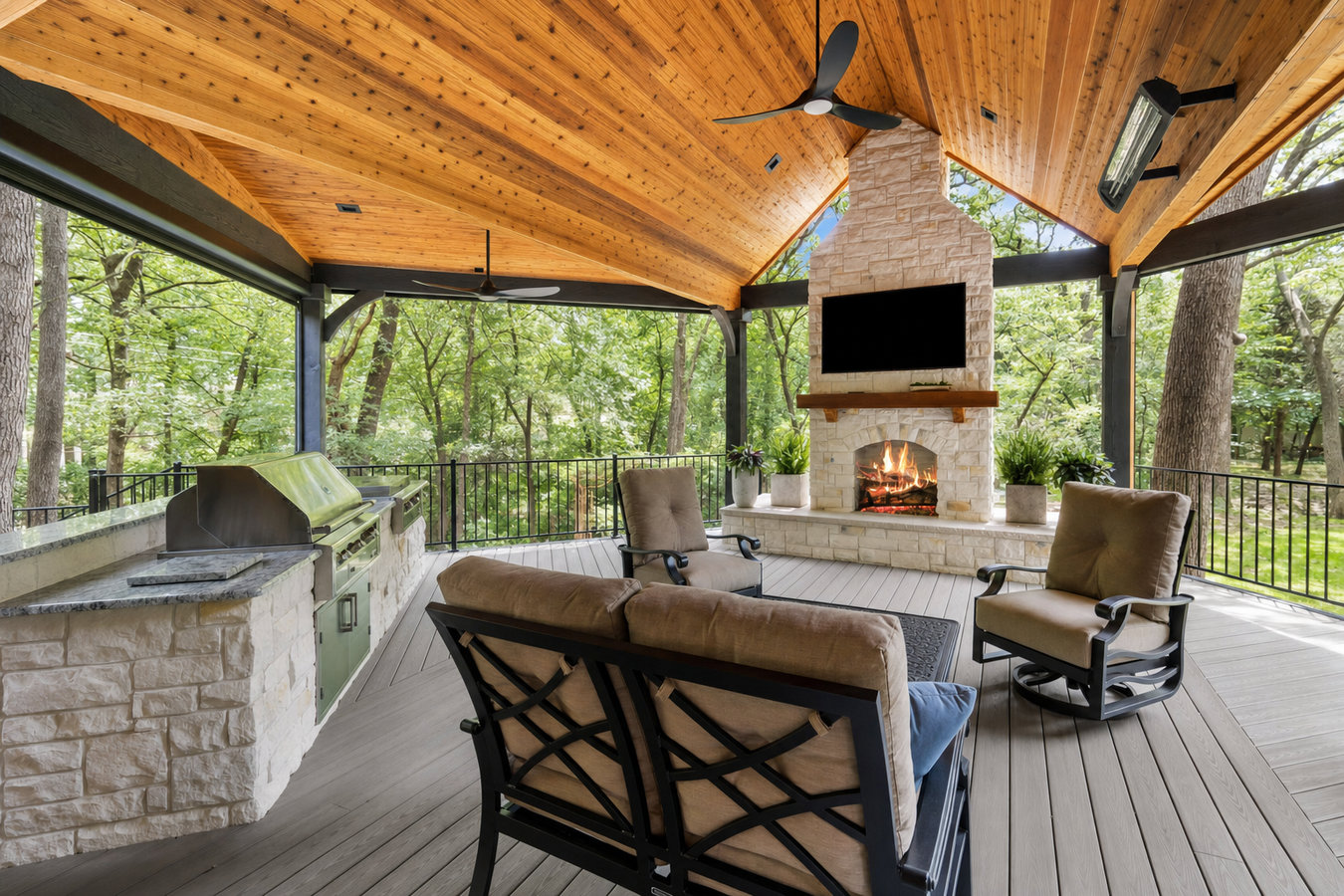
Covered deck and patio cover installation in Port Arthur means setting posts, framing a roof structure, and attaching it securely to your home or a freestanding foundation, most projects taking one to three weeks of construction after the City of Port Arthur permit is approved.
In Southeast Texas, a covered outdoor space is not a luxury - it is the difference between actually using your backyard and avoiding it from May through September. Port Arthur's heat index regularly exceeds 100 degrees, and direct afternoon sun on an uncovered deck makes it unusable for most of the day. A well-designed cover drops the temperature in the space significantly and gives you a shaded area that works for morning coffee, evening cookouts, or just sitting outside without feeling like you are standing in an oven. If you want the added protection of screens to block insects and wind-driven rain, our screened-in porches and screened decks service can be combined with a solid roof cover or done as a separate project.
Every covered deck project we build goes through the City of Port Arthur permit process. We handle the application on your behalf - you do not need to visit city offices or manage the review timeline yourself.
If you walk outside in June and immediately retreat back inside because of the heat and direct sun, that is the clearest sign a covered space would change how you live in your home. Port Arthur's combination of direct sun and high humidity makes an uncovered patio nearly unusable for most of the day during the long summer months.
Port Arthur averages over 55 inches of rain per year - well above the national average - and storms here tend to come fast and hard. If you are scrambling to cover your outdoor furniture or watching your grill rust out after every summer storm, a solid cover structure would protect your investment and mean one less thing to worry about when the sky darkens.
If you see boards that are gray, splintering, or soft underfoot, your deck has been fighting Port Arthur's humidity for years. Adding a cover at this stage - combined with any needed deck repairs - dramatically extends the life of the structure by keeping direct rain and UV off the wood. A contractor can assess whether the existing deck is worth saving or whether a fresh build makes more sense.
Water stains on the wall where a cover meets your house, a roof line that dips in the middle, or a visible gap between the ledger board and your home's siding are all signs the existing structure is failing. In Port Arthur's storm environment, a compromised cover is a liability. Getting it assessed sooner rather than later means you avoid a situation where a tropical system finishes the job for you.
We build attached and freestanding covered decks and patio covers throughout Port Arthur and Jefferson County. Attached covers connect directly to your home's exterior wall using a properly flashed ledger board - sharing the wall's structural support and typically costing less than freestanding designs. Freestanding covers stand on their own post-and-footing system, which is useful if your home's wall is not in the right position or if you want the structure positioned over a pool, garden area, or detached patio slab. Both types are engineered and fastened for the wind loads common along the Gulf Coast, and both go through the City of Port Arthur permit and inspection process. Roofing options include corrugated metal, polycarbonate panels, and solid decking or shingles matched to your home - each with different tradeoffs for noise, light, and maintenance that we walk through with every customer. When you want bug protection added to the covered space, our screened-in porches and screened decks service handles the screen enclosure as a complement to the roof structure.
For homes in Port Arthur's flood zones - where many properties sit on elevated piers - we design the cover connection to work with the elevated foundation rather than against it. The North American Deck and Railing Association publishes construction standards for deck and cover projects that inform how every structure we build is framed and fastened. For homeowners thinking about adding an open decorative structure rather than a solid roof, our pergola installation service is worth comparing.
Best for homeowners who want a cost-effective shade structure connected to their home's exterior wall - the most common covered patio option in Port Arthur.
Right for properties where an attached design does not work - stands on its own footings and can be positioned anywhere on the lot, including over a pool or garden.
Suited for homeowners starting from scratch who want a combined deck and roof structure - everything from footings to finished cover in one project.
For homes with an existing cover that is sagging, leaking, or structurally compromised - we assess what can be saved and replace what cannot.
Port Arthur sits in one of the most humid regions in the entire country, with summer heat indices regularly exceeding 100 degrees and humidity that rarely drops to comfortable levels. This means the material choices for a covered deck matter more here than in most of Texas. Untreated wood rots faster in this environment than almost anywhere else in the state - pressure-treated lumber or aluminum framing is the practical baseline for structures expected to last. The city also sits in Jefferson County's windstorm zone, which means covered decks and patio covers must be engineered and fastened to withstand Gulf Coast storm wind loads, not just standard residential minimums. The Texas Windstorm Insurance Association sets the construction standards that apply here, and a contractor who does not account for those requirements is cutting corners that could cost you dearly when a storm rolls through. Homeowners in Beaumont and neighboring communities face similar wind and humidity conditions when planning outdoor structures.
A significant portion of Port Arthur sits in FEMA-designated flood zones, and many homes were elevated on piers following flooding from past hurricanes. Attaching a covered deck to an elevated home requires more careful engineering than a standard ground-level build - the connection to the existing foundation has to be designed for the specific conditions of that lot. If your subdivision also has an active HOA - common in newer developments in Groves and Port Neches - HOA approval and city permit approval are two separate processes, and both are required before work begins. We ask about HOA rules upfront on every project.
We ask a few basic questions: attached to the house or freestanding, roughly how large, any flood zone or HOA considerations. This is not a sales pitch - it is enough information to give you a useful estimate rather than a guess. We reply to all inquiries within one business day.
We visit your property, measure the space, look at your home's exterior wall if the cover will attach there, and talk through what you have in mind. This 30-to-60-minute visit is your best chance to ask questions. A written, itemized estimate follows within a few days at no cost to you.
Once you approve the estimate and sign a contract, we submit the permit application to the City of Port Arthur on your behalf. Plan for one to three weeks for city review. On the first day of work, the crew marks post locations, digs footings, and pours concrete - the most disruptive part of the project.
Once footings cure, the crew frames the structure and installs the roofing material. If attached to your house, the connection point is sealed and flashed to prevent water intrusion. After construction, the city inspector reviews the work, then we walk you through the finished project and hand over the passed inspection paperwork.
Free on-site estimate, no obligation. We handle the City of Port Arthur permit from start to finish.
(409) 217-6028Jefferson County sits in a designated windstorm area, and every covered deck we build is fastened and framed to handle the wind loads that come with Gulf Coast storm seasons. We do not build to the minimum - we build to what the local climate actually demands. A structure that cannot hold in a tropical storm is not a structure worth having.
Untreated wood rots faster in Southeast Texas than in almost any other part of the state. We specify pressure-treated lumber, aluminum framing where appropriate, and corrosion-resistant hardware on every project. The Texas A&M AgriLife Extension documents the wood decay rates in humid Gulf Coast climates - the difference between the right material and the wrong one is measured in years of service life.
Every covered deck project we build goes through the City of Port Arthur permit and inspection process. That means a city inspector signs off that the work meets local safety standards, you have documentation for your home sale, and there are no surprises from code enforcement down the road. We handle the permit application from start to finish - you do not manage any of that paperwork.
Many Port Arthur homes sit on elevated piers because of the city's flood history. Attaching a covered deck to an elevated foundation is more complex than a standard build, and we are experienced with the engineering that makes it work correctly. We ask about flood zone status and foundation type on the first call - before any plans are drawn.
Building a covered deck in Port Arthur is not the same as building one in Dallas or Houston. The wind exposure, humidity, flood zone considerations, and permit requirements here demand a contractor who works in this specific market - not one applying generic standards to a coastal environment.
Open-frame structures that define your outdoor living area and create shade without a solid roof - a good option when you want style and partial coverage over a deck or patio.
Learn MoreEnclose your outdoor space with screens to block Port Arthur's mosquitoes and no-see-ums while keeping airflow and natural light - can be combined with a solid roof cover.
Learn MorePermit review takes time - the sooner you call, the sooner your shaded outdoor space is ready when you need it most.